Public school educators
Classroom beta equipment
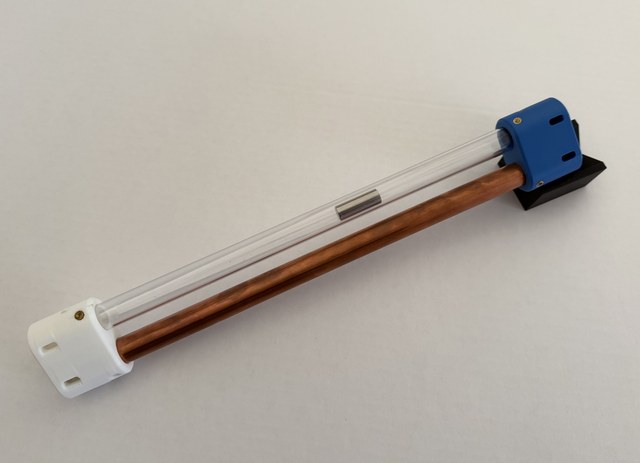
Apply for an assembled dual-tube Lenz’s Law demonstrator for your classroom. Approved requests are supplied at no cost, subject to manufacturing availability.
Apply for classroom equipmentStudent-led · Open hardware · Hands-on learning
OpenApparatus develops open-source hardware for hands-on physics and mathematics. Explore a demonstration or discuss an activity for your classroom or community program.
Get Involved
Apply for classroom equipment, request a hands-on session, or bring a local chapter to your community.
Public school educators
Apply for an assembled dual-tube Lenz’s Law demonstrator for your classroom. Approved requests are supplied at no cost, subject to manufacturing availability.
Apply for classroom equipmentSchools & community programs
Request a hands-on session for your school, university, or nonprofit. Share your learners and goals so we can discuss a suitable activity and availability.
Request a workshopHigh school student leaders
Bring students together to build open-source apparatus and support hands-on learning. Tell us about your school, team, and ideas for a local chapter.
Start a chapterEquipment access
Public school educators can apply for donated, assembled dual-tube Lenz’s Law demonstrators. Quantities are limited, with priority for Title I schools and underfunded public districts. Fulfillment depends on manufacturing availability.
View the beta programExplore printable STL parts, materials lists, and assembly guidance. Choose a design and follow its build and safety instructions.
Choose a designUniversity and community partners: discuss demonstration and equipment arrangements with us.
The hardware
Choose a question. Explore the design. Make it your own.
Compare the drop
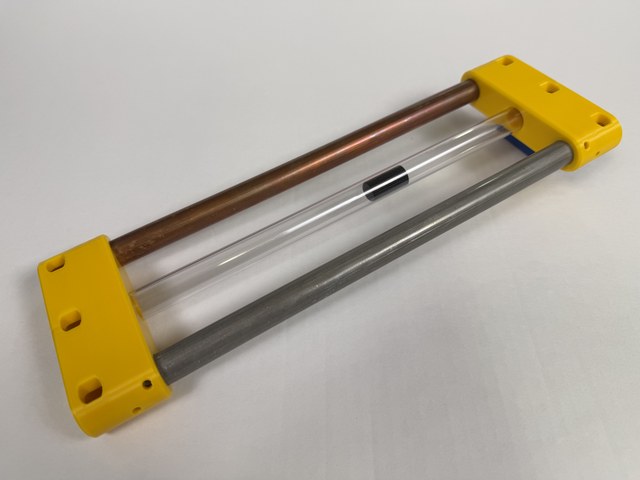
Compare a magnet descending through copper with a nonmagnetic control weight falling through a clear tube.
Compare materials
Explore magnetic braking in copper and aluminum alongside a clear-tube control.
Watch the motion
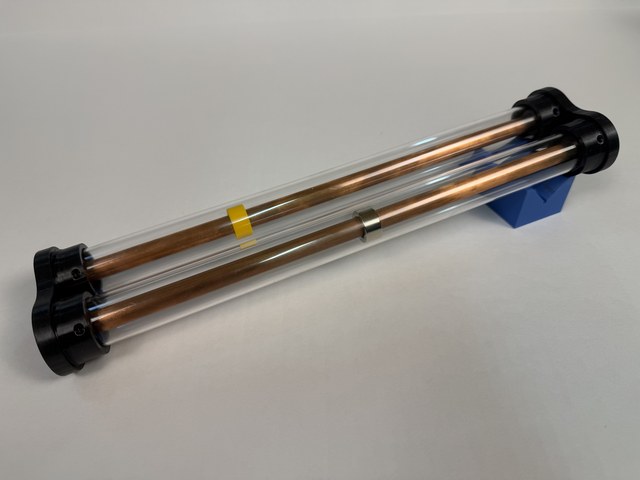
Watch a ring magnet and a control ring descend around copper tubes, with both paths visible through clear outer tubes.
Follow the Lenz’s Law demonstrator assembly procedure in a short video.
Browse the physics project repository
A new family of apparatus
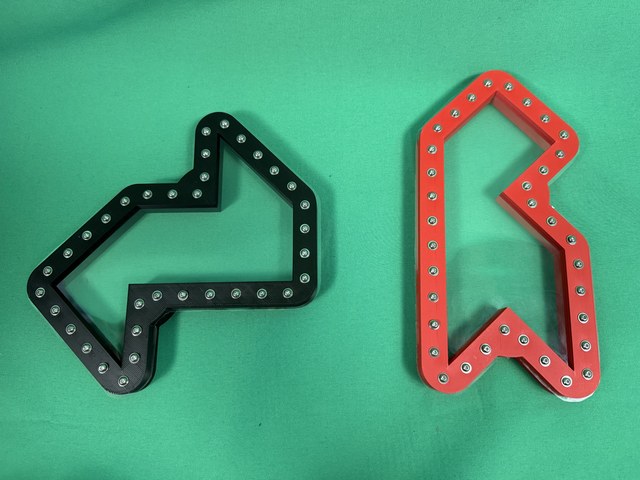
Explore geometry and vibration through two differently shaped, 3D-printed drum models. Build, compare, and discuss how mathematical ideas connect with physical experiments.
These models illustrate mathematically isospectral shapes. Membrane tension and construction affect the actual sound of physical builds.
From curiosity to investigation
A proposed introductory session combines prediction, observation, explanation, and a simple design discussion. We can discuss the format with your staff before scheduling.
Example Lenz’s Law activity
Which object will arrive first?
Compare the two descents.
Discuss what could cause the difference.
Suggest a change to the apparatus or investigation.
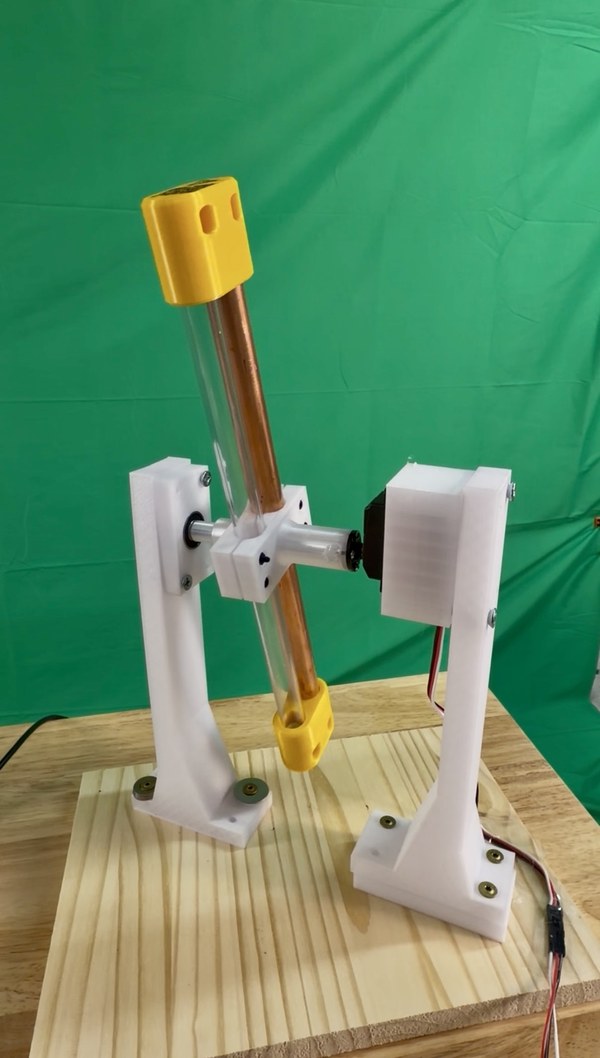
Inside the development process
The dual-tube design developed through repeated changes to materials, end caps, and tube retention. A custom motorized fixture was built to repeatedly flip the apparatus during development testing.
Read the design and testing notesThe distribution record
See where beta hardware has been distributed, by U.S. state and country. Distribution records do not by themselves establish classroom use or learning outcomes.
Loading distribution data…
| Reporting location | Units |
|---|
Our mission
Every student should have the chance to build, test, and understand how things work.
OpenApparatus helps remove financial barriers to physics, mathematics, and engineering education through openly shared designs and hands-on learning. Our student-led initiative connects classroom ideas with real apparatus: print a part, assemble a demonstration, and investigate for yourself.
We invite chapters, university lecturers, and nonprofits serving low-income communities to bring these experiences to more learners.
Meet the founder
Studying physics and mathematics made me want to build models that bring abstract ideas to life. I designed our Lenz’s Law Demonstrator to explore magnetic braking and make the effect easier to see and explain.
After piloting a hands-on 3D printing workshop for local fourth graders, I founded OpenApparatus to help more students experience that same excitement of making something real. The goal is simple: give more learners the tools to become builders.
Our educational philosophy
Our apparatus supports educators’ teaching. Activities can be adapted to a course or community program, with educators guiding the learning goals.